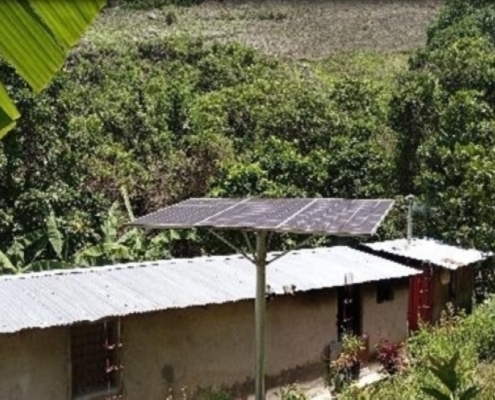
In 2021, more than 1.5 million people in Colombia still lacked access to electricity. The non-interconnected areas, characterized by low population density and limited economic development, face structural constraints that hinder communities’ capacity to cover the costs of electricity access, whether through grid extension or off-grid systems.
The study assessed the impacts of electrification solutions implemented in these areas at community level (households and institutions), considering a gender-based approach. It also formulated recommendations for future project design and implementation, including appropriate system sizing and viable service tariffs for standalone solutions, to strengthen the positive impacts and optimize the financial resources allocated to electrification.
The evaluation was funded by the French Development Agency (AFD) and jointly led by the AFD, the Ministry of Mines and Energy (MME) and the Institute for the Planning and Promotion of Energy Solutions for Non-Grid-Connected Areas (IPSE). The study was carried out by a team of consultants comprising GRET (France), Energía sin Fronteras (ESF – Spain) and Valoración Económica Ambiental (VEA – Colombia).
Mandated by ESF, Eneris co-led the study with GRET, which included the consultation of more than 200 users and operators and an in-depth analysis of 14 electrification projects across different communities (11 with standalone solar systems and 3 with solar nano- or mini-grids). The proposed recommendations were co-constructed with the Colombian authorities, ensuring alignment with national priorities and implementation capacities.